
Gold in the Digital Capital Markets Era
Examining how established stores of value interact with modern ownership, verification and settlement systems.

Research and perspectives across precious metals, real-world assets, digital assets, macroeconomics, market structure, tokenization and global capital-market infrastructure—built to frame long-term change with institutional discipline.
Research notes on the changing relationship between tangible value, digital representation, liquidity and market infrastructure.
Examining how established stores of value interact with modern ownership, verification and settlement systems.
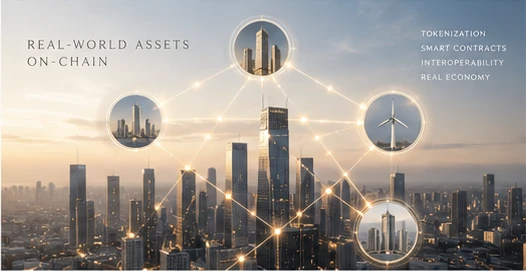
A framework for understanding the operational layers between an underlying asset and its digital representation.
Why controls, verification, liquidity design and settlement matter as much as the token itself.
Where established capital-market practices meet new rails for records, transfer and programmable workflows.

Tokenization can change process design, but liquidity still depends on market participants, structure and trust.

A structural lens on inflation sensitivity, supply constraints, diversification and the role of real assets.
Concise observations for readers following the evolution of real assets and market infrastructure.
Digital rails can improve workflows; the quality, rights and verification of the underlying asset remain fundamental.
Faster transfer can reduce friction without automatically creating deeper two-way markets.
Governance, legal rights, data integrity and operational resilience shape institutional usability.
Our framework studies how tangible and contractual assets may interact with digital ownership records, settlement systems and institutional capital. The focus is infrastructure—not promotional claims about guaranteed liquidity or returns.
RWAurix Insights evaluates market evolution through six connected dimensions. The objective is to understand where technology can improve infrastructure while preserving disciplined analysis of rights, liquidity, risk and capital.
Underlying value, rights, provenance and economic exposure.
Systems connecting issuance, records, transfer and settlement.
Market depth, access, participants and execution conditions.
Representation, permissions, transferability and data integrity.
Market, legal, operational, technology and counterparty risk.
How institutional capital connects across assets and jurisdictions.